
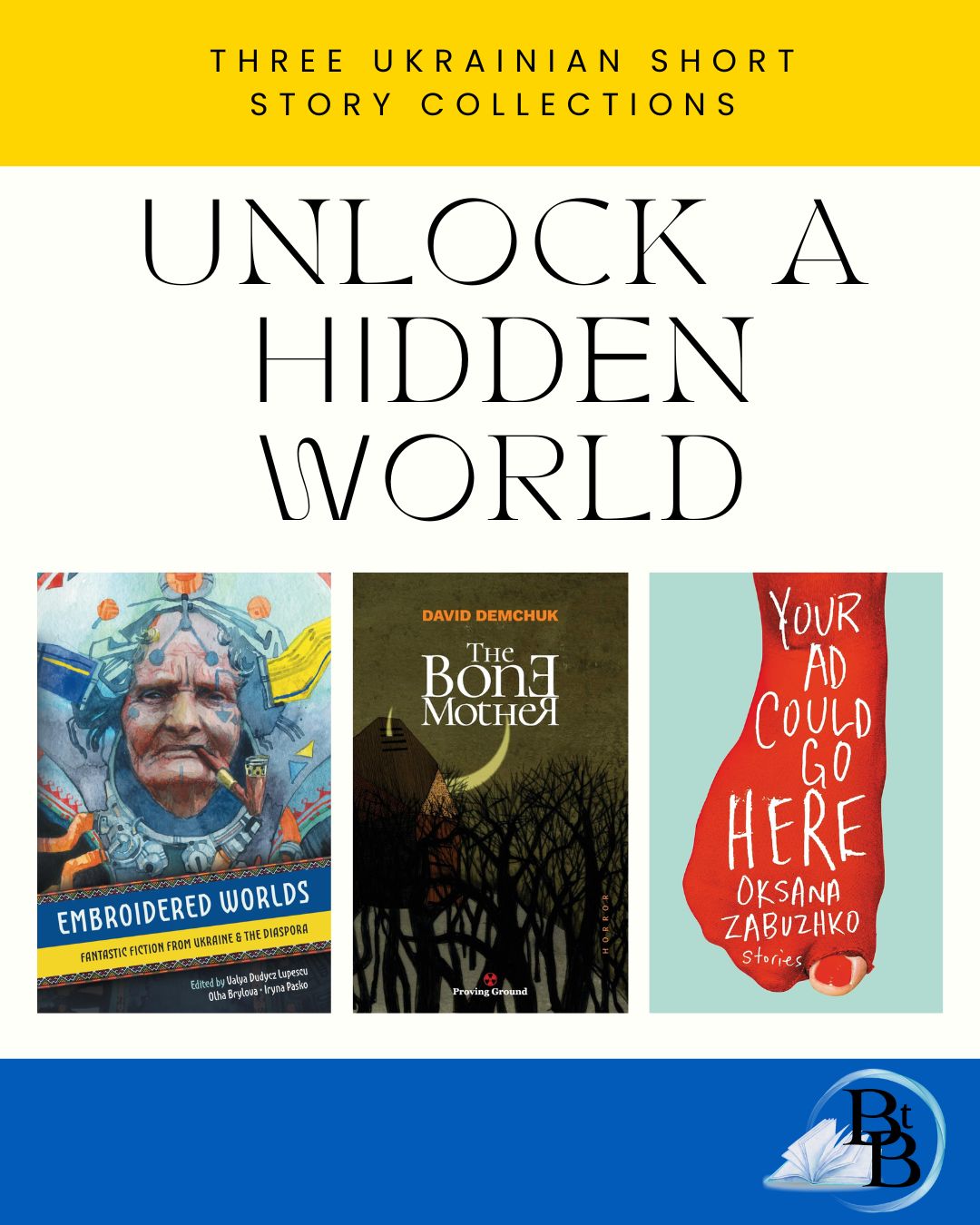
Unlock a Hidden World
Three Ukrainian Short Story Collections
Ukraine has a rich, strange, and wildly inventive literary tradition that most English-speaking readers have barely glimpsed. Short fiction, in particular, has been a Ukrainian art form for centuries, and recent translations are finally making that world accessible.
These three collections belong together on your shelf. They’re not all translations, strictly speaking—but each one is a doorway into the same imaginative territory: a Ukrainian landscape where mythology and history bleed together, where the past isn’t buried but walking around in daylight, where women’s voices carry the weight of nations.
Embroidered Worlds: Fantastic Fiction from Ukraine and the Diaspora
Edited by Valya Dudycz Lupescu, Olha Brylova & Iryna Pasko
30 short stories from writers living in wartime Ukraine—most of them appearing in English for the very first time—alongside writers from the Ukrainian diaspora. Science fiction, fantasy, horror, magic realism, fairy tales, slipstream, and alternate history, sometimes all in the same story.
- A desperate trek through the icy canyons of Mars.
- A doll-sized family with giant-sized opinions.
- A defiant princess whose fate must remain a secret.
- A grandmother’s embroidery that has the power to literally alter the world around her.
The stories provide you with a distinctly Ukrainian way of looking at the world that is earthy and cosmic at once, that reaches into old folktales and mythology while also staring unflinchingly at modern reality.
Think of Embroidered Worlds the way you’d look at a traditional Ukrainian rushnyk: each embroidered section has its own beauty, but it’s when you step back and see the whole cloth that the magic hits.
The Bone Mother
by David Demchuk
David Demchuk’s father was born in Ukraine and emigrated to Canada in 1929, and the bones of that inheritance are visible on every page of this book. Set on the border of Romania and Ukraine in the shadow of World War Two, The Bone Mother is a collection of interconnected short tales told by and about the last mythological creatures of Eastern Europe rusalky, Baba Yaga, strigoi, the golem—as the world that sustained them is being destroyed by war, famine, and Stalin’s Night Police.
What Demchuk does that’s genuinely rare is treat Slavic folklore not as colorful decoration but as a moral universe. His creatures are not scary because they’re monsters; they’re scary because the same forces trying to eradicate them are eradicating people. The Holodomor—Stalin’s engineered famine that killed millions of Ukrainians—hovers over the pages without being named directly, making it more haunting, not less.
The structure will suit readers who loved Miss Peregrine’s Home for Peculiar Children—each story is preceded by an antique photograph that feels like a portal. The prose is spare and cold and elegant. It will chill you.
Your Ad Could Go Here: Stories
by Oksana Zabuzhko | Translated by Nina Murray, Halyna Hryn, Askold Melnyczuk, Marco Carynnyk & Marta Horban
This collection of eight stories is Oksana Zabuzhko’s most varied work translated into English. Moving from Soviet-era childhood (a KGB raid on a family apartment, told in devastating second person) to the Orange Revolution to a modern tennis lesson with very strange undertones to a novella rooted in an old Ukrainian folktale about a guelder rose flute, fear, desire, sisterhood, national identity, myth, and fairy tale are all woven together.
Fair warning: Zabuzhko writes in long, winding, clause-heavy sentences that demand your full attention. This isn’t a collection you skim.
Reading Them Together
Each of these books is worth reading on its own. But together they do something special: they let you see Ukrainian storytelling from three different angles: from writers inside Ukraine, from the diaspora looking back, and from an outsider shaped by family memory.
They also share a conviction that folklore isn’t nostalgia. In all three books, the old stories—Baba Yaga, embroidered magic, mythological creatures hiding in borderland villages—are ways of thinking about survival, identity, and resistance.
Ukraine has been fighting for its cultural existence for a long time, and its literature carries that history in every sentence. These books are an invitation to understand why that matters. Pick up one of these three books this week. Start anywhere—a single story is enough.